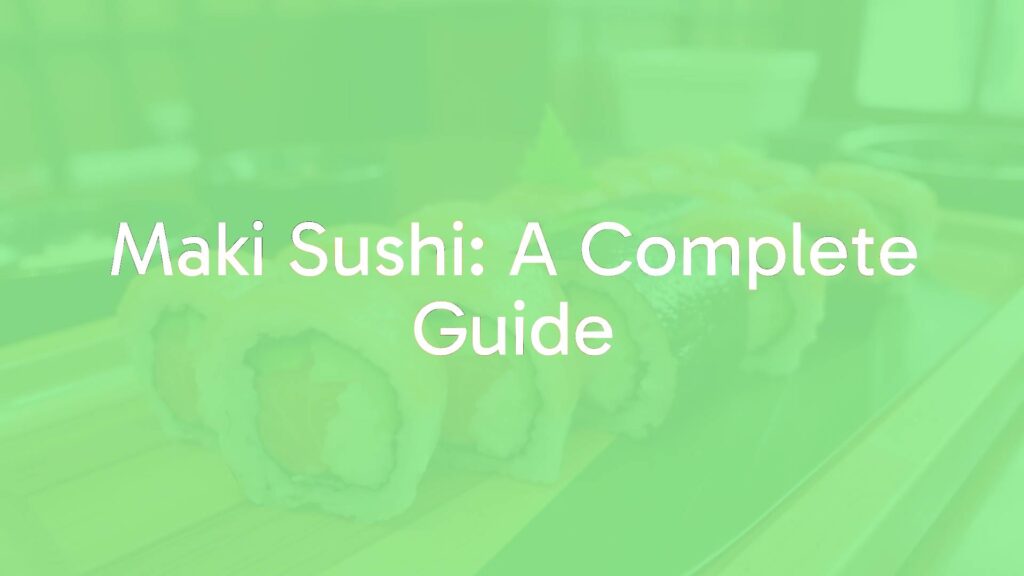
When people think of sushi, they often picture maki sushi. This popular dish, known for its rolled and spiral look, is an important part of Japanese food that people all over the world enjoy. So, what is maki sushi? Simply put, maki is a sushi roll made by wrapping vinegared rice and various fillings in seaweed, called nori. The word “maki” comes from the Japanese word “maku,” which means “to roll.” This name perfectly describes how it’s made. Maki sushi brings together different flavors and textures, making it a favorite for many.
One thing that makes maki sushi special is that you can fill it with almost anything-raw fish, cooked ingredients, or vegetables. This means that nearly everyone can find a maki roll they like, no matter their taste or diet. Whether you’ve loved sushi for years or are trying it for the first time, learning about maki sushi will help you enjoy it even more.

What is maki sushi?
Origin and meaning of maki sushi
Maki sushi, usually just called “maki,” is a kind of sushi roll that many think of when they hear “sushi.” The term “maki” comes from the Japanese verb “maku,” meaning “to roll.” This shows exactly how the dish is prepared: the ingredients are placed on a sheet of nori with a layer of vinegared rice, then rolled into a cylinder using a bamboo mat. This method creates a compact, bite-sized sushi roll that looks good and tastes great.
Mixing rice and other ingredients in food goes far back in Japanese history, growing out of old ways to store fish in rice. But what we know as maki sushi today started becoming popular a few hundred years ago. The process of rolling is important, as is using good ingredients. Even if a restaurant doesn’t call it “maki sushi,” many well-known rolls like the spicy tuna roll or California roll are types of maki.
Difference between maki, nigiri, and sashimi
There are different kinds of sushi, and it helps to know how maki sushi is not the same as two other popular types: nigiri and sashimi. Here’s an easy way to tell them apart:
- Maki: This is a sushi roll with rice and fillings rolled inside seaweed (nori), then cut into pieces. Maki rolls usually have a few ingredients inside and are cut into 6 to 8 pieces, so every bite offers a mix of tastes.
- Nigiri: Here, rice is shaped by hand into an oval and topped with one slice of fish or seafood. Usually, there’s no seaweed and no fillings-just rice and fish, showing off the taste of the fish. Nigiri is typically served in pairs.
- Sashimi: Sashimi is just thin pieces of raw or smoked fish or seafood. There’s no rice at all. Sashimi is for those who want to taste the pure flavor of the fish alone.

Is there raw fish in maki sushi?
Sometimes maki sushi has raw fish, but not always. Many famous rolls include raw fish, like spicy tuna or salmon rolls. However, you’ll also find plenty of cooked or vegetarian choices.
For example, a California roll has cooked (or imitation) crab, cucumber, and avocado-no raw fish. Shrimp tempura rolls have cooked, fried shrimp, and eel rolls use cooked eel. Vegetarian rolls may have in cucumber, avocado, mushrooms, or sprouts. If you want to avoid raw fish, read menu descriptions closely or ask the server. Most good sushi places will mark which rolls have raw fish.
Types of maki sushi rolls
Maki sushi comes in several types, mainly based on the size, the way they are rolled, and what’s inside. Here are the main categories:
Hosomaki (thin rolls)
Hosomaki means “thin rolls.” These are narrow, usually about 1 inch wide, and are very simple-each one often contains just one filling apart from the rice and seaweed. The seaweed is always on the outside, holding everything tightly together.
- Tekka Maki (Tuna): Filled with fresh tuna.
- Kappa Maki (Cucumber): Vegetarian; just cucumber inside.
- Natto Maki: Uses fermented soybeans for a strong, unique taste.
Futomaki (thick rolls)
Futomaki means “thick rolls.” These are much larger, around 2 to 2.5 inches wide, and can contain four or more fillings along with the rice and seaweed. The seaweed wraps around everything on the outside.
Futomaki often includes things like omelet, gourd strips, mushrooms, cucumber, and different types of fish or veggies. These rolls are often made for special days or festivals and have several flavors in each bite.

Uramaki (inside-out rolls)
Uramaki, or “inside-out rolls,” are especially well-liked in Western countries. For these, the rice goes on the outside and the seaweed wraps the fillings inside. You might see these rolls with toppings like sesame seeds or fish roe stuck to the outer rice.
The California roll is the best-known uramaki, made popular in the U.S. because it doesn’t have raw fish and is easy to enjoy. Many creative or new-style sushi rolls use the uramaki style.
Temaki (hand rolls)
Temaki means “hand roll.” This roll is cone-shaped, made to be picked up and eaten with your hands. A bigger sheet of seaweed is filled with rice and toppings, then rolled into a cone. Temaki is more casual and lets you put in whatever fillings you want. The seaweed stays crisp, giving a pleasing texture alongside the rice and fillings.
Popular maki sushi roll varieties
Here are some famous types of maki rolls you’ll find on many menus:
California roll
A widely known roll with imitation crab (or real crab), avocado, and cucumber, covered with rice on the outside and sometimes topped with sesame seeds or fish roe. It’s mild and perfect for anyone new to sushi.
Spicy tuna roll
This roll features chopped raw tuna mixed with a spicy sauce (usually mayo and chili sauce), along with cucumber or scallion for extra crunch. It can be maki (seaweed outside) or uramaki (rice outside).
Dragon roll
Known for its creative look, the dragon roll usually has shrimp tempura and cucumber inside, with thin avocado slices on top to look like “scales.” It’s commonly drizzled with sweet eel sauce or spicy mayo.
Rainbow roll
This colorful roll starts with a California roll base, then gets topped with slices of several kinds of raw fish (like tuna, salmon, and yellowtail) and avocado in a rainbow effect.

Key ingredients and equipment for maki sushi
Making maki sushi requires a few key ingredients and some special tools. Here’s what you need:
Sushi rice
The rice is the base for all sushi. Sushi rice, or “shari,” is short-grain rice that gets cooked and then mixed with rice vinegar, sugar, and salt. This gives the rice its sticky texture and a slightly sweet and tangy taste. Brown sushi rice works too if you want more fiber and a nuttier flavor. Making good sushi rice involves rinsing well, cooking carefully, and mixing in the seasoning while still warm. Cover the rice to keep it from drying out.
Nori (seaweed sheets)
Nori is the thin, dried seaweed sheet used to wrap maki rolls. Good quality nori should be dark, shiny, and crisp, but become bendable when it touches the moist rice. Most maki uses traditional nori, but soy paper or thin cucumber sheets can be used instead.
Fish and other fillings
Maki fillings can be very creative but often include:
- Tuna: Used in classic tuna or spicy tuna rolls.
- Salmon: Known for rich, buttery flavor.
- Yellowtail: Mild and tender.
- Grilled eel, cooked shrimp, or imitation crab are popular cooked choices.
If using raw fish, it must be labeled as “sushi-grade” to make sure it is safe to eat raw.
Vegetarian and vegan options
Vegetarian options work well in maki sushi. Here are some common fillings:
- Avocado: Creamy and smooth.
- Cucumber: Crisp and refreshing.
- Carrots: Sweet, usually sliced into thin sticks.
- Shiitake mushrooms: Roasted or sautéed for a savory flavor.
- Red cabbage, sprouts, bell peppers, mango, tofu, or tempeh are also great choices.
Bamboo rolling mat and tools
You’ll need a bamboo mat (makisu) to roll and shape your sushi. Other helpful tools include:
- Sharp knife: For slicing rolls without crushing them.
- Small bowl of water with a bit of rice vinegar: For wetting your hands and knife-this keeps rice from sticking.
- Cutting board: For preparing and slicing rolls.

How to make maki sushi at home
Making maki sushi at home can be enjoyable and cost-effective. It may feel difficult at first, but it gets easier with a few tries. Here’s how:
Preparing sushi rice
Start by rinsing your sushi rice until the water is clear. For white rice, usually use 1.5 cups of water per 1 cup of rice. Cook the rice, then let it sit off the heat for 10 minutes. In a small bowl, mix rice vinegar, sugar, and salt (use about 2 tablespoons vinegar, 1 tablespoon sugar, and 1 teaspoon salt per cup of raw rice). Gently fold this mix into the warm rice without smashing it. Cover rice with a damp towel to stop it from drying out until you’re ready to roll.
Selecting and cutting fillings
Have all your fillings ready and cut into long, thin strips before you start rolling. Consistency is important for neat rolls. For example, cut cucumber or avocado into long sticks, slice mushrooms thinly, and for fish, cut into even strips about ¼-inch thick.
Step-by-step maki rolling technique
- Place your bamboo mat on a clean surface. Keep a bowl of water with vinegar handy to dip your fingers and knife.
- Lay a sheet of nori, shiny side down, on the mat, with the long side toward you.
- Wet your hands and gently press rice over the lower two-thirds of the nori. Leave about a 1-inch space at the top uncovered.
- Put fillings in a line along the bottom third of the rice, closest to you.
- Use your thumbs to lift the edge of the mat, rolling the nori and rice over the fillings. Hold the fillings with your fingers as you roll.
- Continue rolling with gentle, even pressure to make a tight cylinder. Squeeze gently through the mat to shape the roll.
- Moisten the bare edge of the nori and roll the rest of the way to seal.
- Place the finished roll aside, seam-side down, and repeat with more rolls as needed.
Tips for slicing rolls neatly
- Use a very sharp knife for best results.
- Wet your knife with water or vinegar mix between each cut to prevent sticking.
- First, cut the roll in half, then slice each half into 3 or 4 even pieces.
- Use a gentle sawing motion when cutting.
- Wipe the blade between cuts for clean slices.
Common mistakes and troubleshooting
- Rolls falling apart: Rolls aren’t tight enough or have too many fillings. Use firm, even pressure and avoid overstuffing.
- Rice sticking to hands or knife: Wet hands and knife often using your water/vinegar mix.
- Nori tearing: Nori might be old or you might be pressing too hard. Use fresh nori and handle carefully.
- Lopsided rolls: Spread fillings and rice evenly before rolling.
- Rice drying out: Always keep rice covered with a damp towel when not using it. Store uncut rolls wrapped well if saving for later; slice right before eating.

How to serve and eat maki sushi
Maki sushi is usually arranged neatly on a plate, showing off the colors and neat slices. It is served with a few common items:
- Soy sauce: For dipping. Some people dip only the side with fish or filling to avoid making the rice too salty or soggy.
- Wasabi: A spicy green paste that adds heat. Use it carefully-a little goes a long way.
- Pickled ginger: Thin slices of ginger in vinegar, meant to clear your taste buds between different kinds of sushi.
You can also try dipping sauces like spicy mayo, eel sauce (unagi), ponzu (citrusy soy sauce), or carrot-ginger sauce for variety.
Etiquette for eating maki sushi
- You can use chopsticks or your hands-either is fine for maki sushi.
- Each piece should be eaten in one bite, if possible, to enjoy all the flavors together.
- If you dip in soy sauce, it’s better to dip the end with filling instead of the rice to keep the roll together.
- Eat pickled ginger between rolls as a palate cleanser, not on the sushi.
- Don’t rub chopsticks together; it’s seen as impolite.
Enjoying your food matters most, but these simple tips can make your experience more pleasant.
Nutrition and health considerations
Maki sushi is usually a healthy choice, but what’s inside makes a big difference. Here’s what to know:
Is maki sushi healthy?
- Lean protein: Rolls with fish such as tuna or salmon have heart-friendly omega-3 fats.
- Vegetables: Rolls with veggies add vitamins, minerals, and fiber.
- Easy to control portions: The small pieces help prevent overeating.
- Carbohydrates: The rice gives you energy; brown rice adds more fiber.
Some rolls are less healthy, especially if they have:
- Lots of creamy cheese or mayo.
- Fried fillings like tempura shrimp.
- Too much soy sauce, as it’s high in salt.
To keep your meal lighter, pick rolls with fish and veggies and skip or limit fried parts and heavy sauces.
Gluten-free and allergy notes
- Gluten: Soy sauce often has wheat, so pick gluten-free tamari if you need to avoid gluten. Also, imitation crab sometimes contains wheat-check the label.
- Fish/Shellfish allergies: Since many rolls include seafood, ask about ingredients or stick to veggie-based rolls if you have an allergy.
- Other allergies: Sesame seeds on rolls can trigger allergies, and some rolls have dairy or egg. Always check ingredients if you’re concerned.
With careful choices, maki sushi can fit many diets and needs and makes for a flexible and satisfying meal.
