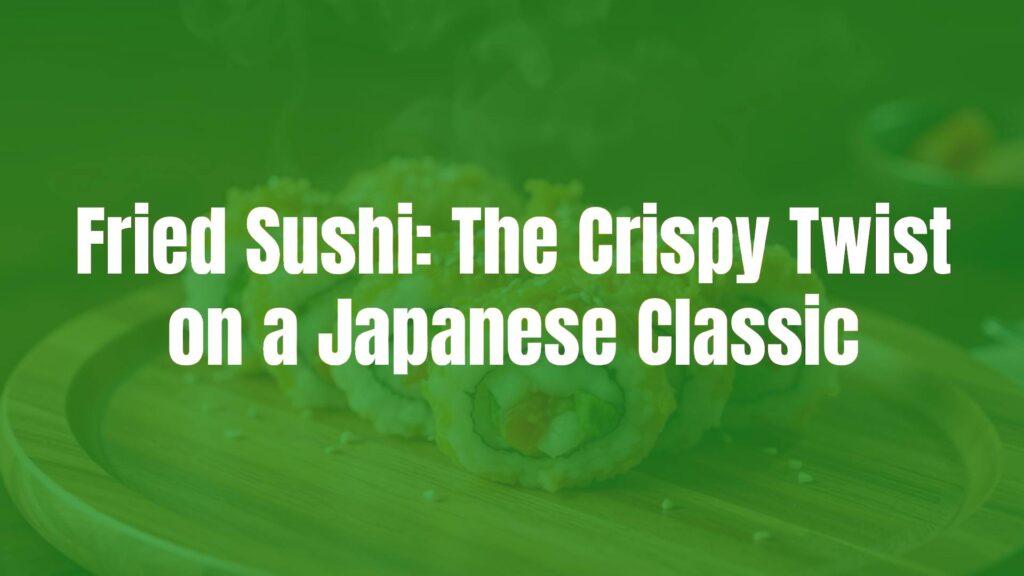
Introducing Fried Sushi: A Crispy Take on Tradition
Fried sushi presents an adventurous culinary experience, melding the time-honored essence of Japanese sushi with the enticing texture and warmth of a golden crust. This inventive style is gaining popularity among sushi enthusiasts seeking novel flavors and textures, making it a must-try for those curious about the evolution of sushi in global cuisine.
What Sets Fried Sushi Apart?
Unlike traditional sushi, which is served raw or lightly cooked, fried sushi incorporates a cooking step where rolled sushi (often maki or uramaki style) is coated in batter or panko breadcrumbs and then deep-fried or pan-fried until crisp. This preparation results in sushi with a delightful crunch on the outside, while still preserving the signature fresh fillings within. The contrast between the warm, crispy exterior and the tender, flavorful interior is what makes fried sushi so unique.
Core Ingredients and Flavor Profile
The hallmark of fried sushi is its blend of textures and flavors. Typical fillings might include seafood such as salmon, shrimp, or crab, or even vegetables for a vegetarian option. These are wrapped with vinegared rice and seaweed (nori), then encased in a light batter or panko before frying. This process introduces an irresistible crunch, and sometimes a subtle nuttiness from the breadcrumbs. Sauces, such as spicy mayo or eel sauce, are sometimes drizzled on top to enhance the flavor and visual appeal. The result is a roll that is savory, creamy, and crisp all at once.
Why Fried Sushi is a Crowd Favorite
The popularity of fried sushi lies in its textural intrigue and approachable taste. The warmth and crunch can be especially inviting to those who are new to sushi or hesitant about raw fish. The method also offers great versatility, accommodating a wide range of fillings and sauces, making it easy to appeal to diverse palates at gatherings or restaurants.
Origins and Influence
While traditional sushi in Japan is prepared with minimal cooking, fried sushi is a product of global fusion cuisine, particularly blossoming in Western countries where experimental sushi chefs play with textures and temperatures. Though not rooted in classic Japanese sushi culture, this creative trend reflects the adaptability and international appreciation of sushi, blending authentic techniques with innovative presentations.
How to Enjoy Fried Sushi: Serving and Pairing Suggestions
Fried sushi is typically served warm, soon after frying, to maximize its crispiness. It pairs well with dipping sauces such as soy sauce, spicy mayo, or sweet eel sauce. For beverages, light Japanese lagers or chilled sake can complement the richness of the fried roll, while green tea offers a refreshing contrast. Sides like pickled ginger, edamame, or seaweed salad round out the experience.
Nutritional Insights and Dietary Notes
Fried sushi offers a satisfying mix of carbohydrates, proteins, and fats, depending on the fillings and frying method. While it is heartier than some raw sushi varieties due to the oil used in frying, it still provides valuable nutrients from seafood, such as omega-3 fatty acids, along with fiber and vitamins from vegetable fillings. However, those mindful of calorie intake, gluten sensitivity (from breadcrumbs or batter), or oil should consider modified preparations, such as oven-baked versions or gluten-free coatings.
Celebrating Fried Sushi’s Distinct Charm
Fried sushi stands out as an inventive and enjoyable extension of the traditional sushi repertoire, offering new sensations while staying rooted in Japanese-inspired flavors. Whether you’re a longtime sushi devotee or new to the scene, biting into a crispy fried sushi roll is a delightful adventure—one that exemplifies how creativity and heritage can harmoniously meet on the plate.
