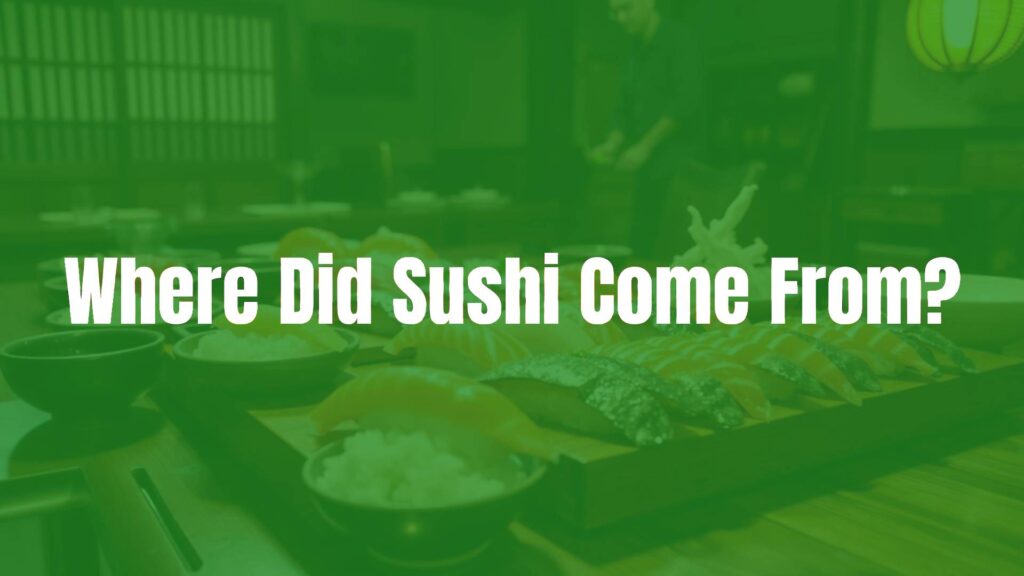
Sushi has a much longer and more involved history than many people think. It didn’t start out as the elegant, fresh dish most of us know today. Instead, sushi began as a way to keep fish from going bad in early communities who needed a way to store food safely. The practice started in the rice fields of Southeast Asia, where people found ways to use what they had to develop this early form of sushi, which spread and evolved over time-eventually becoming a major part of Japanese food culture.
This evolution shows how people adapted over time-what started as a way to keep fish edible slowly changed into a special type of cooking. The story of sushi contains many examples of people borrowing, improving, and sharing food ideas, reminding us that sushi’s beginnings were not just Japanese, but instead grew out of a mix of Asian cultures and practical needs.

What Does the Word ‘Sushi’ Mean?
The word ‘sushi’ might seem to mean raw fish to many, but in fact, it refers to rice that has been seasoned with vinegar. The writing of “sushi” (すし, 寿司, 鮨) in Japanese also tells us about its history; for example, “鮨” was used in old Chinese texts to describe fish pickled with salt and rice. This shows that the main purpose of early sushi was to preserve fish, not to eat fresh seafood right away.
This difference is important. Originally, the “sourness” of the rice, created by fermentation or vinegar, was what made sushi unique. Early sushi wasn’t about eating raw fish, but about using prepared rice to keep fish for later and add a tangy flavor that people grew to enjoy.
Is Sushi from Japan or China?
Most people see sushi as a Japanese food today, but its earliest form actually started in Southeast Asia, moved through ancient China, and only then reached Japan. The idea came from people putting fish in rice to keep it from spoiling-a method dating back centuries in the Mekong and Irrawaddy River valleys. By the 2nd century CE, it was mentioned in Chinese dictionaries. The Chinese learned this from native people as they moved southward.
Japan created the varieties of sushi we think of today, but the basic idea-using rice to keep fish safe to eat-is older and comes from a wider area of Asia. This is a good example of how food travels and gets improved over time as it moves from one place to another.
How Did Sushi Start as a Way to Keep Food Fresh?
The original form of sushi was a practical answer to keeping fish safe to eat in hot places before anyone had refrigerators. People mixed fish with salt and cooked rice. When rice started to break down, it made lactic acid. Together, the acid and salt slowed germs from growing, so the fish could be eaten much later-even months or years after it was first packed away.
This first type of sushi, called narezushi, was especially useful in places where people caught a lot of freshwater fish, but didn’t have good ways to store food. At first, the rice was just a means to help the fish ferment, and was thrown away after the fish was ready. Over time, this survival method became much more than just a way to hold onto fish-it turned into today’s sushi.

Sushi’s Early Days: From China to Japan
Sushi traveled a long way from a simple method for preserving fish to the famous dish it is now. In the beginning, in Southeast Asia and ancient China, people cared more about making the fish last than about taste or texture-as opposed to the care Japanese chefs show today when they prepare sushi.
The spread of this technique across Asia shows how ancient cultures learned from one another. As each place tried new things, the method improved over time, bit by bit setting the stage for sushi’s growth in Japan.
Narezushi: Sushi’s First Form
The oldest known kind of sushi was narezushi. It started in Southeast Asia, where people put freshwater fish together with lots of salt and rice, then pressed it under something heavy, often in barrels. The fish would sit for months or even years, and the rice’s fermentation kept the fish safe to eat for a long time.
Narezushi spread to China by the 4th century BC, and Chinese texts from the 2nd century CE use a word for “pickled fish with rice and salt.” While it was a plain food for people living near rice fields, not seen as anything special, it helped many survive tough times.
How Sushi Changed After Arriving in Japan
Sushi, and especially narezushi, likely got to Japan from China around the 8th century, about the time Buddhism made fish more popular since it discouraged eating meat. At first, the Japanese made sushi the same way, discarding the rice after fermentation. But soon, Japanese cooks started changing the recipe.
During the Muromachi era (1336-1573), a new kind called namanare-meaning “partly fermented”-appeared. If the fish and rice were left together for just a few weeks instead of months, the fish wasn’t as strongly flavored and the rice actually tasted pleasant enough to eat. This was important, as sushi became more than just a way to make fish last, and people began eating both fish and rice together, drawing closer to today’s sushi.

Sushi’s Growth and Change in Japan
Japan, with its many types of seafood and cooking traditions, was where sushi really began to take off. What was once very salty and strongly flavored became something lighter and fresher, as people found new ways to prepare and enjoy it. These changes didn’t all happen at once; step by step, Japanese cooks tried new things that shaped what we know as sushi today.
Thanks to new methods and plenty of fresh fish, sushi in Japan went from something preserved to something enjoyed right away, with each new idea slowly transforming the dish over time.
Funazushi: Japan’s Classic Fermented Sushi
One of the oldest forms of sushi in Japan is funazushi. This style has been made near Lake Biwa for more than 1,000 years. It uses a type of local goldfish, nigorobuna, that’s packed with salt for a year, then stored in rice for as much as four more years. The fish gets a very strong flavor, quite different from most modern sushi. Funazushi is sliced thin and is seen as a rare, expensive treat for those who like its special taste. It is one of the last living examples of ancient sushi making in Japan.
Makizushi and Nigirizushi: The Move to Today’s Sushi
Soon, new ideas led to makizushi (rolled sushi) and nigirizushi (hand-pressed sushi). Around 1750, people invented sheet nori (seaweed). This made it possible to roll rice and fillings together. Cookbooks from this time talk about early versions of makizushi-they weren’t exactly like what we eat now, but they were on the right track.
The biggest change came in the Edo era (1603-1867) with haya-zushi (quick sushi). Instead of fermenting the rice for months, people started using vinegar, making rice sour almost instantly. This allowed sushi to be eaten right away, and a chef named Hanaya Yohei, working in Edo (old Tokyo), is given credit for inventing nigirizushi around 1824. He served a compressed ball of vinegared rice with fresh fish on top-no fermentation needed, since fish from Tokyo Bay was available every day. This turned sushi into a popular quick meal and made it look more like what we eat now.

| Type of Sushi | Main Features | Time Period |
|---|---|---|
| Narezushi | Heavily fermented fish with rice (rice discarded), very strong flavor | Ancient times to early Japan |
| Namanare | Partially fermented, both rice and fish eaten | Muromachi period |
| Makizushi | Rolled sushi with seaweed, rice, and fillings | Mid-18th century-on |
| Nigirizushi | Hand-formed rice with slice of fresh fish | 19th century (Edo period-on) |
When Did Eating Raw Fish in Sushi Become Normal?
Using raw fish in sushi is actually quite new in its long history. Most sushi for centuries was either cooked, heavily salted, or fermented to last longer. But during the Edo period, as nigirizushi gained popularity, people began eating fresh, uncooked fish with vinegared rice, because it was safe and tasted good.
Hanaya Yohei’s method, using vinegar instead of fermentation, made it easy to quickly prepare sushi using whatever fish was available. Before modern refrigeration, some fish like salmon weren’t eaten raw in Japan because of possible parasites. In fact, only in the late 1980s, when Norwegian farmed salmon was proven free of worms, did raw salmon become a normal sushi topping in Japan.
How Did Sushi Become Famous in Japan?
Starting as a way to keep food fresh, sushi slowly turned into one of Japan’s most admired foods. This change came together with Japanese social changes, especially in the Edo period, and showed their love of making food look and taste good, as well as their care in picking fresh ingredients.
What started as a simple food for survival eventually became an art. Today, sushi is one of the best-known parts of Japanese life and is enjoyed all over the world.
Sushi in Edo: The Rise of a Street Food
During Edo times (1603-1867), sushi became even more popular thanks to the busy city life in what’s now Tokyo. Crowds of people wanted fast but tasty food, which led to food stands selling haya-zushi (quick sushi). Hanaya Yohei set up his famous stall in Edo in 1824, selling nigirizushi-hand-shaped balls of vinegared rice with raw fish on top. This was quick to make and easy to eat while on the go. The close location to the sea made fresh fish available every day, so no long fermenting was needed. Nigiri became the main type of sushi, with small restaurants (sushi-ya) popping up across the city, turning sushi into a true part of everyday Japanese life.
Sushi Around the World: Expansion and Change
Sushi didn’t stop spreading after it became popular in Japan. It made its way to many countries, changing as it went. Once a strictly Japanese dish, sushi is now made and enjoyed all over, with changes to fit local ingredients and tastes. This wide appeal shows how easy it is for people everywhere to enjoy sushi in some form.
Sushi’s international story is about sharing ideas, being open to new flavors, and finding ways to keep old traditions while also making something new for different cultures.
When and How Did Sushi Arrive in the West?
Sushi started to appear in Western countries mainly because of Japanese immigrants and growing interest in Japanese culture. The first sushi shop in the United States opened in 1906 in the Little Tokyo area of Los Angeles. Records even show sushi being served at fancy parties as early as 1904 in California.
However, after 1907, laws limiting Japanese immigration and anti-Japanese feeling slowed the spread of their food. Only after World War II, when travel and cold storage improved, did sushi begin to catch on with a wider range of people. The opening of Kawafuku Restaurant in Los Angeles in 1966, offering genuine nigiri sushi, encouraged Americans to try and enjoy sushi, helping it become popular across the U.S. and later worldwide.
How Did Other Countries Change Sushi?
As sushi spread, it was often changed to match what ingredients were easy to get, and to suit local tastes. Many kinds of new sushi appeared, some using foods Japanese cooks would never have imagined, like avocado, cream cheese, or cooked meats.
- California Roll: Invented in Los Angeles in the 1960s. Used avocado instead of fatty tuna and put the rice on the outside to make it look less strange to Americans.
- Philadelphia Roll: Cream cheese and smoked salmon are used.
- B.C. Roll (Canada): Includes grilled salmon skin.
- Australian Sushi: Often uses cooked chicken, beef, and salmon with avocado.

These new types of sushi might be far from traditional, but they let people all over the world enjoy sushi and put their own twist on it.
Frequently Asked Questions About Where Sushi Comes From
Because sushi has such a long and involved history, there are some common misunderstandings. By answering these, we can get a clearer idea of how sushi grew from a simple food to the popular dish we know now.
What Are Some Myths about Sushi’s History?
- Myth: Sushi was always a Japanese dish of raw fish.
Fact: It started in Southeast Asia and China as a way to keep fish from spoiling using rice and salt. - Myth: Sushi always used raw fish.
Fact: Early sushi used fermented or salted fish, not fresh raw slices. - Myth: Sushi began as a story about an old woman storing rice in bird nests.
Fact: There is no proof of this legend, and the real beginnings are much more practical.
Was Sushi Always Made with Raw Fish?
No, it was not. The earliest sushi, like narezushi, used fish that was salted and fermented with rice. This not only made the fish safe but also changed its taste and feel. The way we eat fresh raw fish with vinegared rice only became common in the last two centuries in Japan, after new methods and modern refrigeration.
Why Do Some People Think Sushi Is Chinese and Others Think It’s Japanese?
Some point to the early records in China showing people preserving fish with rice, which is true. But it was in Japan where sushi really changed and became the food we know-by shortening fermentation, mixing fish, rice, and vinegar, and introducing new styles like makizushi and nigirizushi. Japanese cooks raised sushi from a food for survival in the fields to a special dish, and then it traveled the world. So the basics were known in China and Southeast Asia first, but Japan is where today’s famous sushi styles came from.