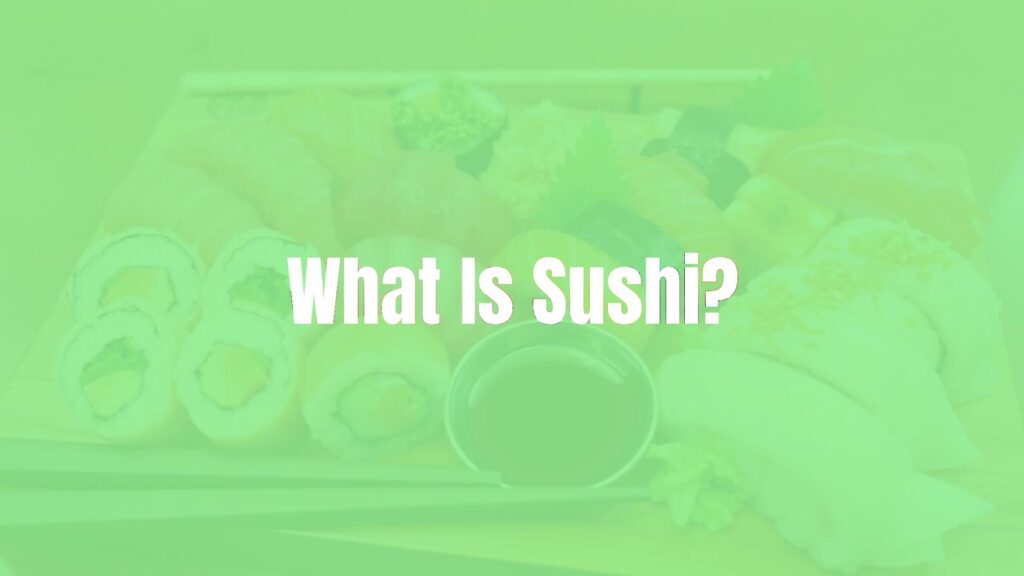
Sushi is a popular Japanese food featuring vinegared rice, most often served with fish or seafood. While many people immediately think of raw fish when they picture sushi, the main ingredient that makes it unique is actually the seasoned rice, called shari. Sushi can include everything from uncooked or cooked fish to vegetables and sweet egg omelets (tamago). This makes it a flexible dish that suits a wide range of tastes, dietary needs, and personal preferences. Sushi is recognized for its delicious flavors and the careful handwork required to prepare it, making it a favorite around the world.

What Is Sushi?
Sushi started in Japan and has become well-known worldwide. The word “sushi” refers to the vinegared rice used in the dish, which gives it a slightly sour taste. While raw fish is a common topping or filling, sushi is really about the rice. This rice forms the foundation for a variety of sushi styles, from simple hand-pressed pieces to decorative rolls.
Sushi’s charm comes from its adaptability. It can feature raw fish, cooked toppings like shrimp or eel, fresh vegetables, or items like tamago. Whether you like adventurous flavors or prefer cooked and mild tastes, there’s a style of sushi for you. Its basic ingredients and wide range of possibilities help explain why sushi is enjoyed in so many places.
Common Ingredients in Sushi
Sushi usually contains the following basics:
- Sushi rice: Medium-grain Japonica rice, seasoned with vinegar, sugar, and salt for a mild sweetness and tang.
- Seafood: Often fish like tuna, salmon, or yellowtail, though shrimp and eel are common for cooked options.
- Vegetables: Ingredients such as cucumber, avocado, or pickled radish add color and crunch.
- Nori: Dried seaweed sheets, typically used for rolled types of sushi.
- Other sides: Wasabi (spicy green paste), pickled ginger (gari), and soy sauce usually come with sushi and help balance flavors.
How Sushi Is Made
Making traditional sushi takes a lot of skill and time. Sushi chefs in Japan usually spend years learning to prepare and flavor the rice before moving on to handling fish or other ingredients. This shows how important the rice is in sushi.
For nigiri, the chef shapes a small mound of rice by hand and sets a slice of fish on top, sometimes with a little wasabi in between. For maki rolls, rice and fillings go on a sheet of nori that’s then rolled with a bamboo mat and sliced into pieces. Every step is careful and purposeful, making sushi not just tasty, but also beautiful to look at.

Where Did Sushi Come From? A Brief History
Sushi’s roots go back hundreds of years. It evolved from a way to preserve fish in fermented rice, called narezushi. In ancient times, the rice was thrown away and only the fish was eaten.
This method began in Southeast Asia and arrived in Japan by the 8th century. Over time, Japanese people began eating the rice along with the fish. The process got faster, and rice was seasoned with vinegar to replace the old fermentation style. This change set the stage for modern sushi.
Sushi’s Early Days in Japan
Original Japanese sushi involved curing fish, such as carp, in salted and fermented rice for months. This created strong flavors and preserved the fish. As the dish spread in Japan, people started using vinegared rice to speed up the process and make it taste better, leading to more edible forms of sushi.
During the Edo period (1603-1868), sushi became faster and fresher. In Tokyo (then Edo), street sellers began selling sushi with fresh seafood from the local bay. Vinegar was used to give the rice a sour taste and allow people to eat it right away.
Sushi in Modern Times
In the late 1800s and early 1900s, improvements in refrigeration meant fresh fish could be used safely. This led to nigiri-zushi: a finger-shaped ball of rice with a slice of raw fish on top. This style is still the most classic form today.
Sushi spread internationally in the later 1900s, arriving in the U.S. in the 1960s, starting in Los Angeles. At first, it was unfamiliar to many, but new inventions like the California Roll (which hides the nori) helped it catch on. Today, sushi restaurants are everywhere, and new recipes keep appearing.

What Makes Sushi Rice Special?
Sushi rice, or shari, is the backbone of any sushi dish. Its proper texture, taste, and stickiness are seen as a mark of a skilled chef. The rice should hold together, be slightly sticky but not mushy, and taste a bit sweet and tangy due to its seasoning.
The right kind of rice is used to get the correct balance-a medium-grain, starchy variety like Japonica, especially Koshihikari. The right mix of vinegar, sugar, and salt is added to the cooked rice while it’s still warm. This makes it sticky enough to form shapes and gives it the signature sushi taste.
What Goes Into Sushi Rice?
| Ingredient | Purpose |
|---|---|
| Japonica white rice | Starchier than Western rice, provides ideal stickiness |
| Rice vinegar | Adds tanginess and flavor |
| Sugar | Balances sourness with a hint of sweetness |
| Salt | Enhances all the flavors |
The Role of Sushi Vinegar
Sushi vinegar (or sushi-zu) blends rice vinegar, sugar, and salt. Some recipes add kombu (seaweed) for depth. This mixture helps season the rice evenly, gives it a shiny appearance, and makes the grains stick together for shaping. Cooling the rice quickly after seasoning keeps the texture just right.
Different Types of Sushi
Sushi comes in many forms, offering something for almost everyone. Each type highlights the rice but uses it with different toppings, fillings, and styles. Here are the main types:
| Type | Description |
|---|---|
| Nigiri | Small, hand-shaped rice ball with a slice of fish or seafood on top. Often eaten in one bite. |
| Maki | Roll with rice and fillings wrapped in nori seaweed, then cut into pieces. |
| Uramaki | “Inside-out” roll with rice on the outside and nori on the inside. Examples include the California Roll. |
| Temaki | Cone-shaped hand roll, filled with rice and toppings, great for eating right after making. |
| Chirashi | Bowl of sushi rice topped with mixed vegetables, fish, and other ingredients. |
| Sashimi | Thinly sliced raw fish or seafood, no rice included. Technically not sushi, but often served at the same places. |
Other Regional Variations
- Oshizushi: Sushi where rice and toppings are pressed into a mold and cut into blocks (from Osaka).
- Inarizushi: Rice stuffed into fried tofu pouches, with a sweet flavor.

Sushi vs. Sashimi
People sometimes mix up sushi and sashimi, but there’s a clear difference. Sushi always includes vinegared rice, and can be topped or filled with raw or cooked items. Sashimi, on the other hand, is simply slices of raw fish-no rice at all. Sashimi is often served first during a meal and is usually eaten with chopsticks, while many types of sushi can be picked up with your hands.
| Sushi | Sashimi | |
|---|---|---|
| Rice | Always present | Never |
| Main ingredient | Rice plus fish, veggies, or egg | Just raw fish or seafood |
| How to eat | By hand or with chopsticks | With chopsticks |
Is Sushi Healthy?
Sushi is usually considered a healthy meal because it uses lots of fresh ingredients and lean protein from fish. However, it can be more or less healthy depending on the ingredients and how it’s made.
Benefits of Sushi
- Omega-3 fats: Fatty fish like salmon and tuna are rich in healthy fats good for your heart and brain.
- Lean protein: Seafood and rice offer protein without too much fat.
- Vitamins and minerals: Seaweed and veggies add important nutrients like iodine, fiber, and vitamins.
- Balance: Traditional sushi often offers a good mix of protein, healthy fats, and carbs.
Risks of Eating Sushi
- Raw fish safety: Eating raw fish carries a small risk of parasites or bacteria. It’s safest to eat sushi from trusted places that follow good food safety rules.
- Mercury: Big fish like tuna may contain more mercury, so it’s smart not to eat them too often, especially for kids or pregnant women.
- High calories or salt: Rolls with fried ingredients, mayonnaise, or lots of soy sauce can be high in calories, fat, and sodium.
How to Eat and Serve Sushi
In Japan, eating sushi is about more than just the food-there are customs and good manners to help you enjoy it fully.
Table Manners for Sushi
- Nigiri is often eaten with your hands, though chopsticks are okay too.
- Dip the fish side-not the rice-into soy sauce so the rice doesn’t fall apart or get too salty.
- Pickled ginger (gari) is eaten between bites as a cleanser, not together with sushi.
- Wasabi should be used lightly; don’t mix it directly into your soy sauce.
- Try to eat each piece in one bite, to taste all the flavors together just as the chef intended.
Common Sushi Sides and Drinks
- Soy sauce: For dipping and extra flavor.
- Wasabi: For spice, usually served with sushi or already inside.
- Pickled ginger (gari): Cleans your palate between bites.
- Green tea: A traditional drink enjoyed with sushi, helping to cleanse your mouth.
Sushi Words and Common Questions
Learning some basic sushi words makes it easier to order and enjoy your meal.
Sushi Terms to Know
- Nigiri: Hand-formed rice with a topping.
- Maki: Rolled sushi in nori.
- Uramaki: Inside-out roll, with rice on the outside.
- Temaki: Cone-shaped hand roll.
- Chirashi: Bowl of sushi rice with toppings.
- Sashimi: Slices of raw fish or seafood.
- Nori: Seaweed sheets for rolling.
- Shari: Sushi rice.
- Gari: Pickled ginger for cleansing your palate.
- Wasabi: Spicy green condiment.
- Makisu: Bamboo mat used for rolling sushi.
- Itamae: A trained sushi chef.
FAQ About Sushi
Is all sushi made with raw fish?
No. Many sushi types use cooked seafood or even egg. Sashimi is the dish with only raw fish.
Can you eat sushi with your hands?
Yes. It’s traditional to eat many types, like nigiri and maki, by hand.
Why is pickled ginger served with sushi?
Gari is meant to clean your mouth between different types of sushi.
Is sushi safe for pregnant women?
Pregnant women should avoid raw fish but can eat cooked types like shrimp tempura rolls. It’s best to ask a doctor for advice.
What’s the best way to use soy sauce with sushi?
For nigiri, dip only the fish side. For rolls, a light dip is enough.
What are the green leaves served with sushi?
These are usually shiso (a minty herb) or sometimes a plastic divider for decoration. Shiso is edible and adds flavor.