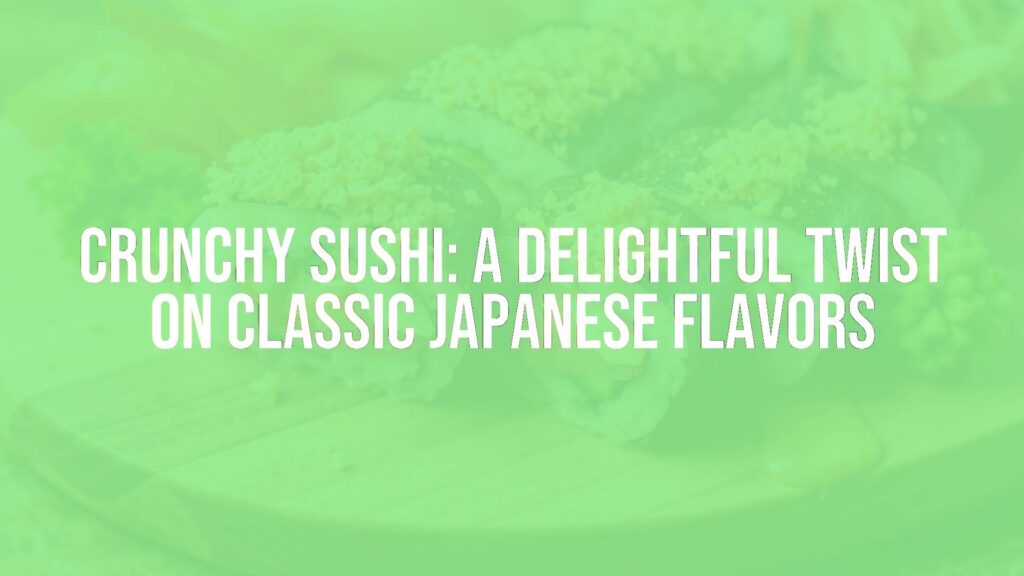
Discovering Crunchy Sushi: A Modern Take on Japanese Tradition
Crunchy sushi has quickly become a favorite among sushi lovers, offering a playful textural contrast that distinguishes it from more traditional varieties. This sushi type is renowned for its crispy elements that deliver a satisfying bite, making it a popular choice for both newcomers and seasoned aficionados of Japanese cuisine.
What Makes Crunchy Sushi Special?
At its core, crunchy sushi encapsulates the essence of innovation within sushi-making. Unlike classic nigiri or maki, crunchy sushi incorporates tempura flakes, fried onions, or panko crumbs either on top or within the sushi roll. It is typically constructed as a roll (maki or uramaki) filled with traditional ingredients like cooked or raw fish, vegetables, and sushi rice, then topped or coated with an inviting crunchy layer. This deliberate contrast between soft rice and fillings with crispy toppings is what sets crunchy sushi apart.
Signature Ingredients and Textures
The hallmark of crunchy sushi is its use of crispy toppings. These can include golden tempura flakes (tenkasu), toasted panko breadcrumbs, or fried shallots, all providing a light and airy crunch. The interior might feature fillings such as shrimp tempura, crab salad, avocado, or cucumber, creating a rich interplay of flavors and textures. sauces such as spicy mayo or eel sauce often complement aromatic, savory layers, enhancing both taste and presentation.
Why Crunchy Sushi is a Fan Favorite
The widespread appeal of crunchy sushi lies in its multisensory experience: the initial crispness followed by creamy or savory centers. It caters to those seeking variety, and the visual allure of golden toppings makes it especially popular at sushi bars and restaurants. Its adaptability means it appeals to diverse palates, with both seafood and vegetarian versions available, making it an accessible gateway for new sushi enthusiasts.
Origins and Evolution in the Sushi World
Crunchy sushi does not have centuries-old tradition like some Japanese staples; instead, it reflects the global evolution of sushi culture. It emerged out of fusion movements, particularly in North America, where chefs embraced creative toppings and textures to entice local tastes. Now, crunchy elements are integrated into modern sushi worldwide, signaling a blend of culinary heritage and innovation.
How to Enjoy Crunchy Sushi: Pairings and Serving Ideas
Crunchy sushi is typically served as sliced rolls, often drizzled with flavorful sauces. Pairings such as light green tea or a chilled glass of sake can balance the richness of the crispy toppings. For a complete meal, consider sides like miso soup or a fresh seaweed salad. Crunchy sushi also shines as a shareable platter, ideal for social dining experiences or as an introduction to sushi for hesitant diners.
Nutritional Information and Dietary Points
Crunchy sushi offers a balanced mix of carbohydrates from rice, protein from seafood or tofu, and fiber from vegetables. However, the addition of fried toppings slightly increases the calorie and fat content compared to traditional rolls. It is advisable for those monitoring dietary fat or gluten (from panko or some sauces) to inquire about specific ingredients. Vegetarian-friendly options are widely available, but those with shellfish allergies should be cautious of shrimp tempura fillings or cross-contamination risks.
Embracing the Crunch: The Unique Contribution of Crunchy Sushi
Crunchy sushi exemplifies the vibrant adaptability of Japanese cuisine, blending texture, flavor, and creativity. It invites diners to experience sushi in a fresh new way, highlighting how culinary tradition continues to evolve. Whether enjoyed as a main course or a special treat, crunchy sushi adds a layer of excitement to any meal and encourages exploration within the world of sushi.
