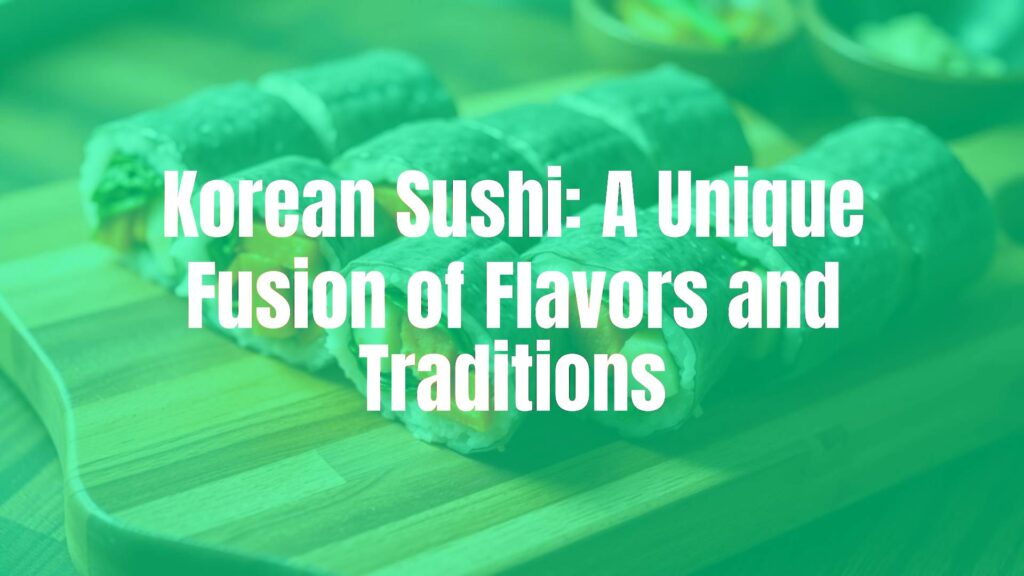
Introducing Korean Sushi: Blending Japanese Technique with Korean Soul
Korean sushi, also known as “gimbap” or “kimbap,” offers a delightful twist on the classic Japanese sushi, seamlessly marrying the artistry of sushi rolling with the robust and diverse flavors of Korean cuisine. Infused with distinctive ingredients, Korean sushi has grown in popularity both within Korea and internationally, admired for its colorful presentation and satisfying taste experience.
What Defines Korean Sushi? Exploring Its Distinct Identity
Unlike traditional Japanese sushi, which often features raw fish and vinegared rice, Korean sushi places greater emphasis on cooked fillings and seasoned rice. At its core, a layer of steamed rice, subtly flavored with sesame oil and salt, is spread over a sheet of seaweed (gim/nori) and filled with a range of ingredients. While the rolling technique is reminiscent of maki rolls, the content and flavors set Korean sushi apart, notably through the signature use of various pickled vegetables, cooked meats, and egg components.
Signature Ingredients and Flavor Combinations in Korean Sushi
The typical gimbap roll includes diverse fillings such as seasoned spinach, crunchy carrots, pickled yellow radish (danmuji), strips of cooked beef or fish cake, and sweet egg omelet, all harmoniously wrapped in roasted seaweed. A touch of sesame oil and a sprinkle of sesame seeds on the finished roll add nutty depth and aroma. Some versions incorporate kimchi, tuna salad, bulgogi, or even cheese, reflecting both regional varieties and contemporary creativity. The combination delivers a medley of savory, pickled, and nutty flavors, contrasted by the tender and crisp textures of the fillings.
The Charm and Widespread Appeal of Korean Sushi
Korean sushi’s popularity lies in its approachability and adaptability. Its reliance on cooked rather than raw ingredients makes it more accessible to a broader audience, including children and those wary of raw seafood. The visually appealing, neatly sliced rounds, bursting with color, make it a perennial favorite for picnics, lunchboxes, and casual gatherings. The balance of taste, nutrition, and convenience ensures its enduring presence at both family tables and street food stalls.
Historical Roots and Cultural Significance
Gimbap originated during the Japanese occupation of Korea, borrowing inspiration from Japanese makizushi while evolving with distinctive Korean ingredients and flavorings. Over time, it became embedded in Korean food culture, cherished as a symbol of communal sharing and festive occasions. Today, regional versions may feature unconventional fillings influenced by local tastes, celebrating the diversity of Korean culinary traditions.
How to Enjoy Korean Sushi: Serving Styles and Pairings
Often enjoyed as a meal or substantial snack, Korean sushi is typically sliced into bite-sized rounds and served at room temperature. It can be paired with traditional Korean sides such as kimchi, pickled radish, or light soups. For beverages, barley tea (bori-cha), soju, or mild makgeolli can complement the flavors, while green tea offers a refreshing palate cleanser. Gimbap also pairs wonderfully with spicy dipping sauces or a dollop of gochujang for those seeking extra zest.
Nutritional Value and Dietary Insights
Korean sushi offers a balanced nutritional profile, often featuring protein from meats or eggs, fiber from fresh vegetables, and essential minerals from seaweed. The use of sesame oil and seeds provides healthy fats. Variations with fish cake or processed ingredients may be higher in sodium, so those watching their salt intake should take note. Vegetarian and vegan versions are easily crafted, although some versions may contain allergens like eggs, fish, or gluten, depending on the chosen fillings and condiments.
Conclusion: Savoring the Unique Spirit of Korean Sushi
Korean sushi, with its inviting medley of flavors, colors, and textures, embodies the spirit of fusion cuisine while remaining true to its Korean roots. From casual picnics to festive gatherings, it continues to delight diners with its freshness, versatility, and handmade charm. For anyone exploring the wide world of sushi, gimbap is a must-try, offering a delicious new perspective on a global favorite.
